

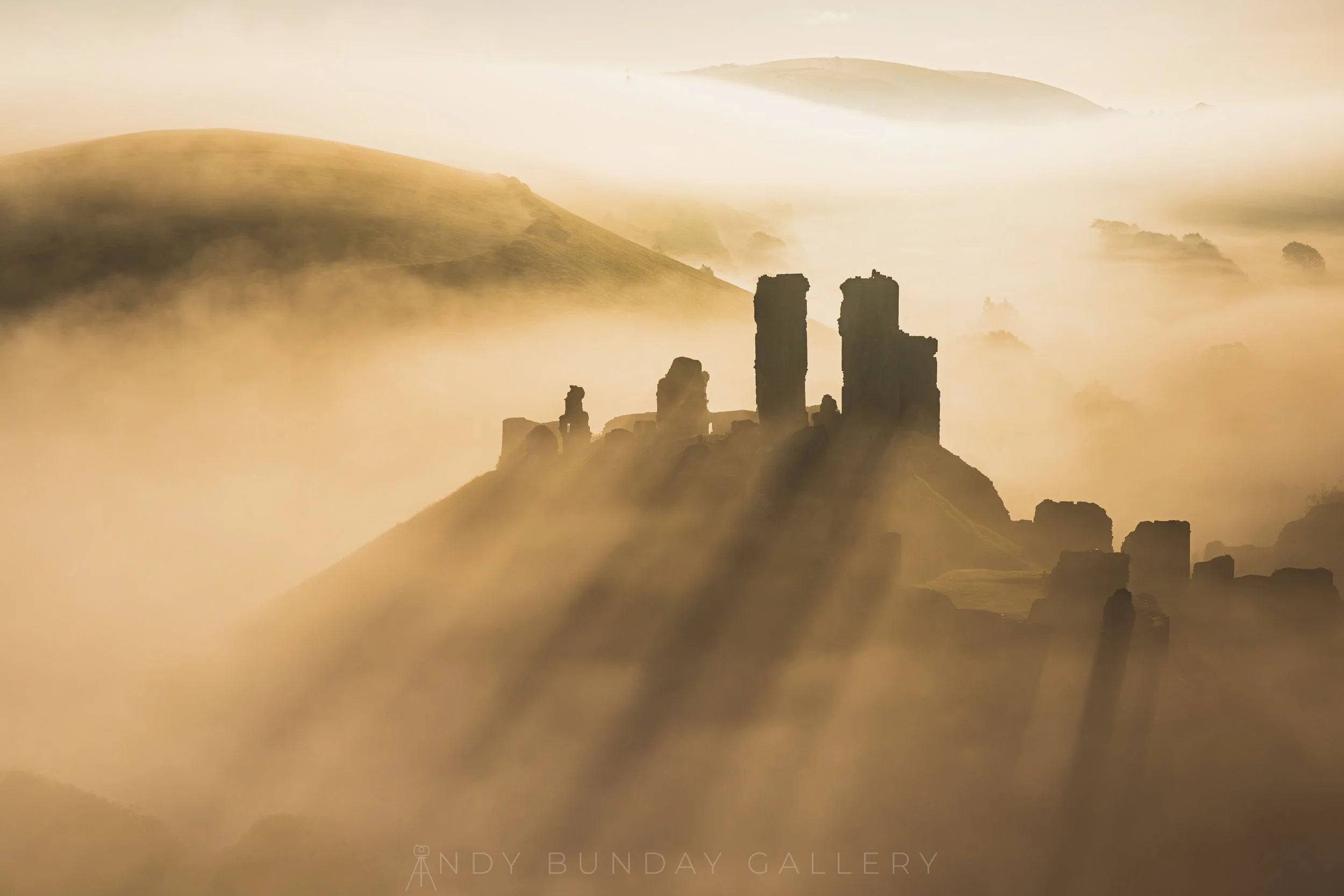
Twenty Visits Later — Mist at Corfe Castle
Corfe Castle, Dorset — October 2026
There are some photographs that seem to come together almost by chance, and others that you have to keep going back for.
Corfe Castle has definitely been the latter for me.
I’ve made the journey to this particular viewpoint more than twenty times over the years, often with the same image in mind — the ruins of Corfe Castle rising above a valley filled with mist. It’s one of those classic landscape photography conditions that looks almost effortless when you see the finished photograph, but getting everything to come together is another matter entirely.
On every previous visit, something has been missing. The mist hasn’t appeared, it has been in the wrong place, there has been too much cloud, too little cloud, or the conditions simply haven’t developed as hoped.
This time, I wasn’t even planning on going.
A Last-minute change of plan
My original plan for Sunday morning was to head into the New Forest.
I woke at around 4:45am and, as I usually do before heading out with the camera, checked the latest weather conditions. The forecast I'd been watching hadn't really suggested that Corfe Castle was going to produce the mist I’d been waiting for.
But something had changed.
Looking again that morning, there were suddenly signs that mist could be developing around Corfe. After more than twenty unsuccessful attempts, it didn’t take much persuading.
The New Forest could wait.
I loaded up the van and headed for Dorset.
There is always a certain amount of doubt on journeys like that. Weather forecasts can point you in the right direction, but mist is notoriously localised and unpredictable. What looks promising on a screen can quite easily disappear before you arrive.
As I got closer to Corfe, however, it became increasingly obvious that this particular gamble might just have paid off.
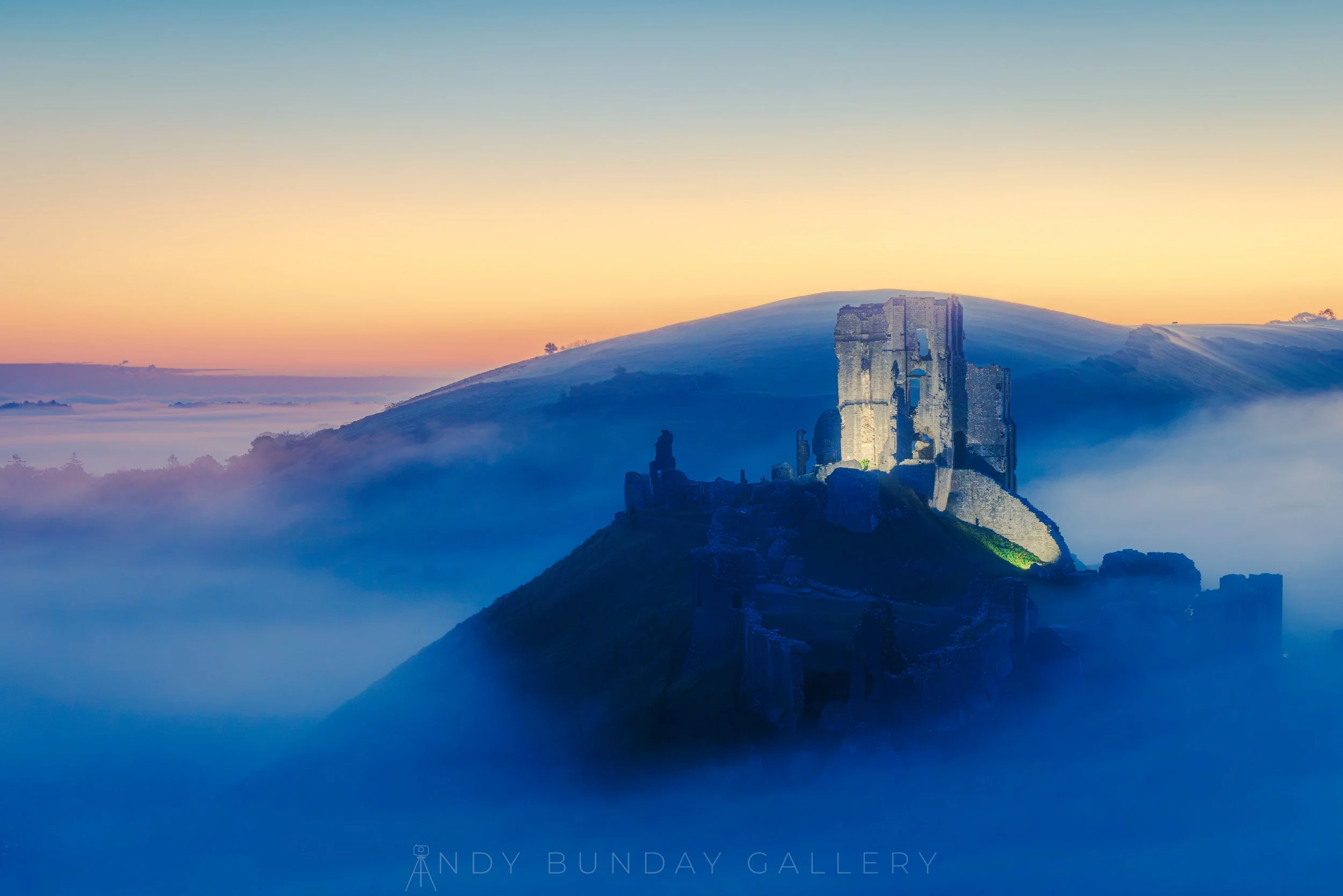
The first signs that more than twenty visits to Corfe Castle might finally have paid off.
THE VIEW I’D BEEN WAITING FOR
After making my way up onto the hillside in the darkness and getting the camera set up, the landscape slowly began to reveal itself.
Below me, mist had settled into the valley surrounding Corfe Castle. The ruins were sitting above it, sometimes clearly visible and at other times partially obscured as the mist moved through the landscape.
This was it.
After all those early starts and all those previous journeys, I was finally standing in front of the conditions I had been hoping to photograph.
As the first light began to build, subtle colour appeared along the horizon and the scene changed almost minute by minute. What had initially been a cool, quiet landscape gradually took on the warmer tones of sunrise.
For a landscape photographer, there are mornings when you find yourself constantly adjusting compositions and looking for something that works.
This wasn't one of them.
For once, the hardest part was simply deciding where to point the camera.
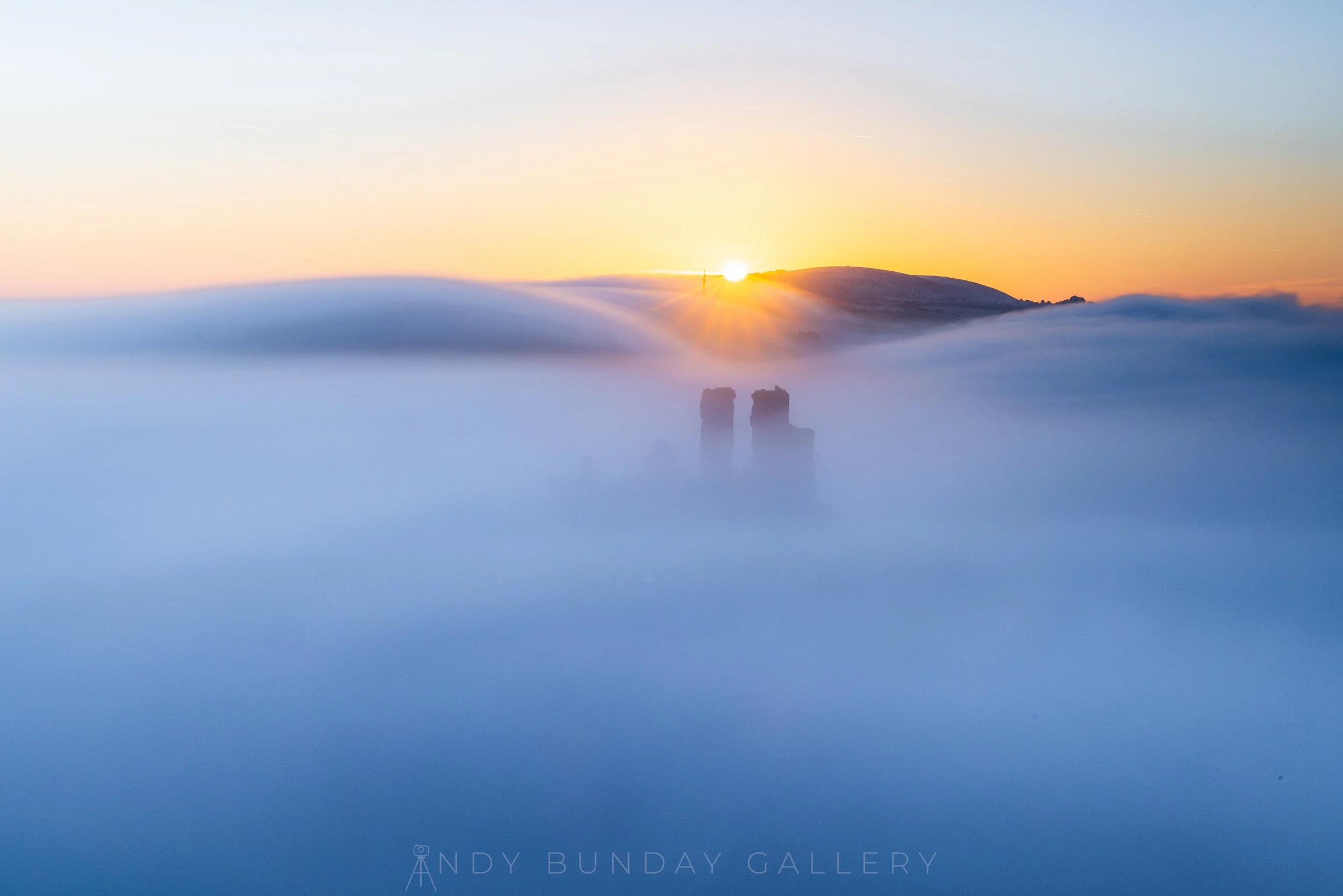
Corfe Castle rising above the mist as the first light of sunrise reaches the valley.
AND THEN THE CASTLE DISAPPEARED
Of course, conditions like these rarely stand still.
Not long after sunrise, the mist began to rise.
Slowly at first, the castle became less distinct. Sections of the ruins would disappear and reappear as the mist moved through the valley. Then the fog continued climbing until eventually the castle vanished altogether.
And it didn't stop there.
Before long, the fog had reached those of us standing on the hillside as well.
There was something slightly ironic about it. After more than twenty visits hoping for mist, I had finally got it — and now I had so much of it that I couldn't see the castle at all.
The cameras stayed on their tripods and the small group of photographers on the hillside did the only thing we really could do.
We waited.
A short glimpse of just how quickly the conditions were changing on the hillside.
Landscape photography involves far more waiting than the finished photographs ever suggest. Sometimes you're waiting for light, sometimes for cloud and, on this occasion, for an entire castle to reappear.
But while we were looking in one direction, something unexpected was happening behind us.
SOMETHING I WASN’T EXPECTING
Someone noticed it first and pointed it out.
Turning away from Corfe Castle, a pale arc had appeared in the mist behind us.
A fog bow.
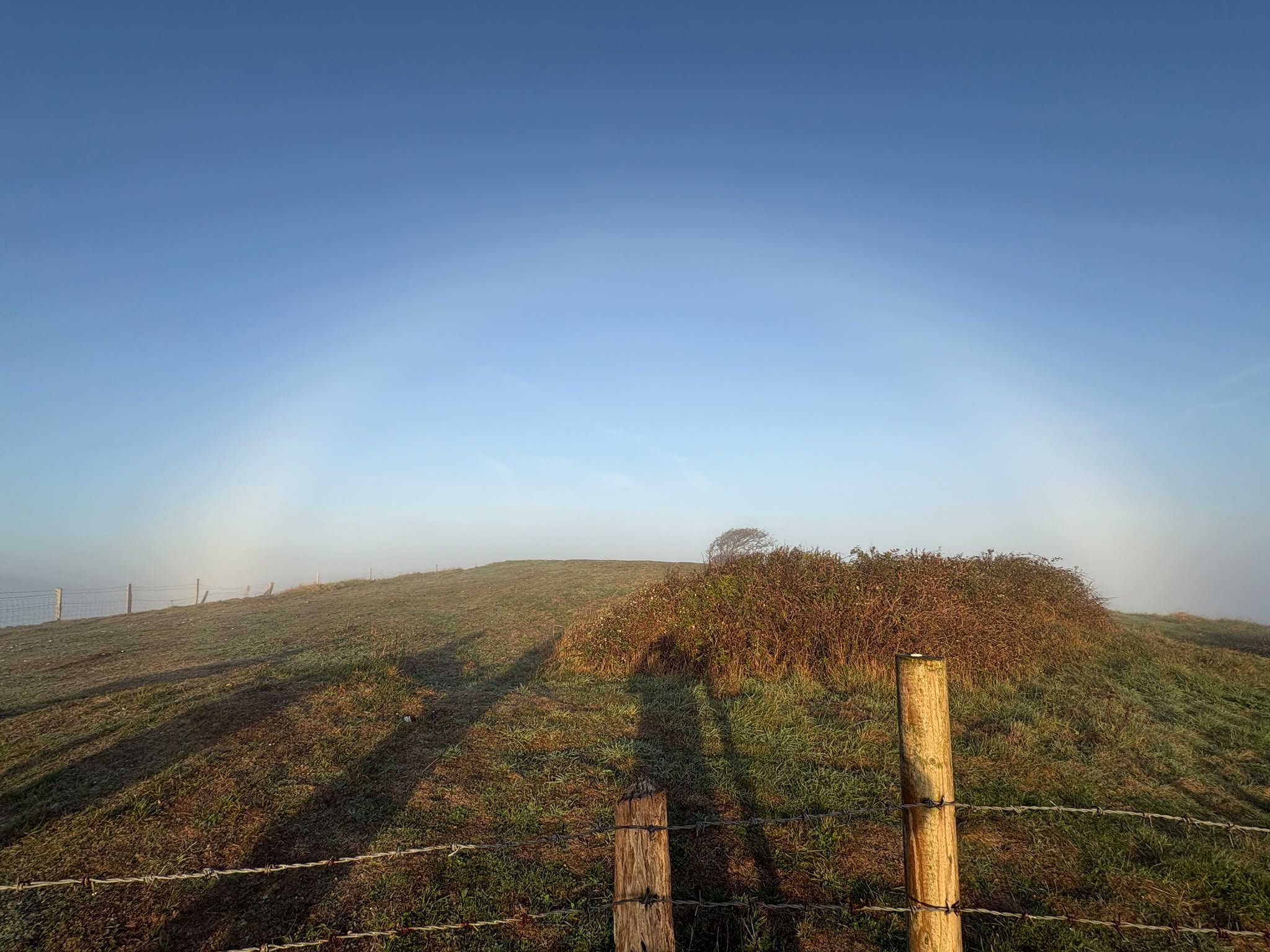
A fog bow developed while we waited, briefly arching through the mist before fading away almost as quickly as it had appeared.
It certainly wasn't something I'd travelled to Dorset expecting to photograph that morning, but it became another memorable part of the experience.
For a few moments, the castle that everyone had come to photograph was forgotten and our attention turned in completely the opposite direction.
It's one of the things I enjoy most about landscape photography. You can spend weeks planning where you're going to stand and what you're hoping to photograph, but the landscape doesn't know anything about your plans.
Sometimes the best thing you can do is look around.
WAITING FOR CORFE TO RETURN
Eventually, the mist began to settle.
The first hints of the castle started appearing through the white before disappearing again. Then, gradually, more of the ruins became visible.
My camera remained set up on the hillside, ready for those brief moments when the mist opened enough to reveal the castle.
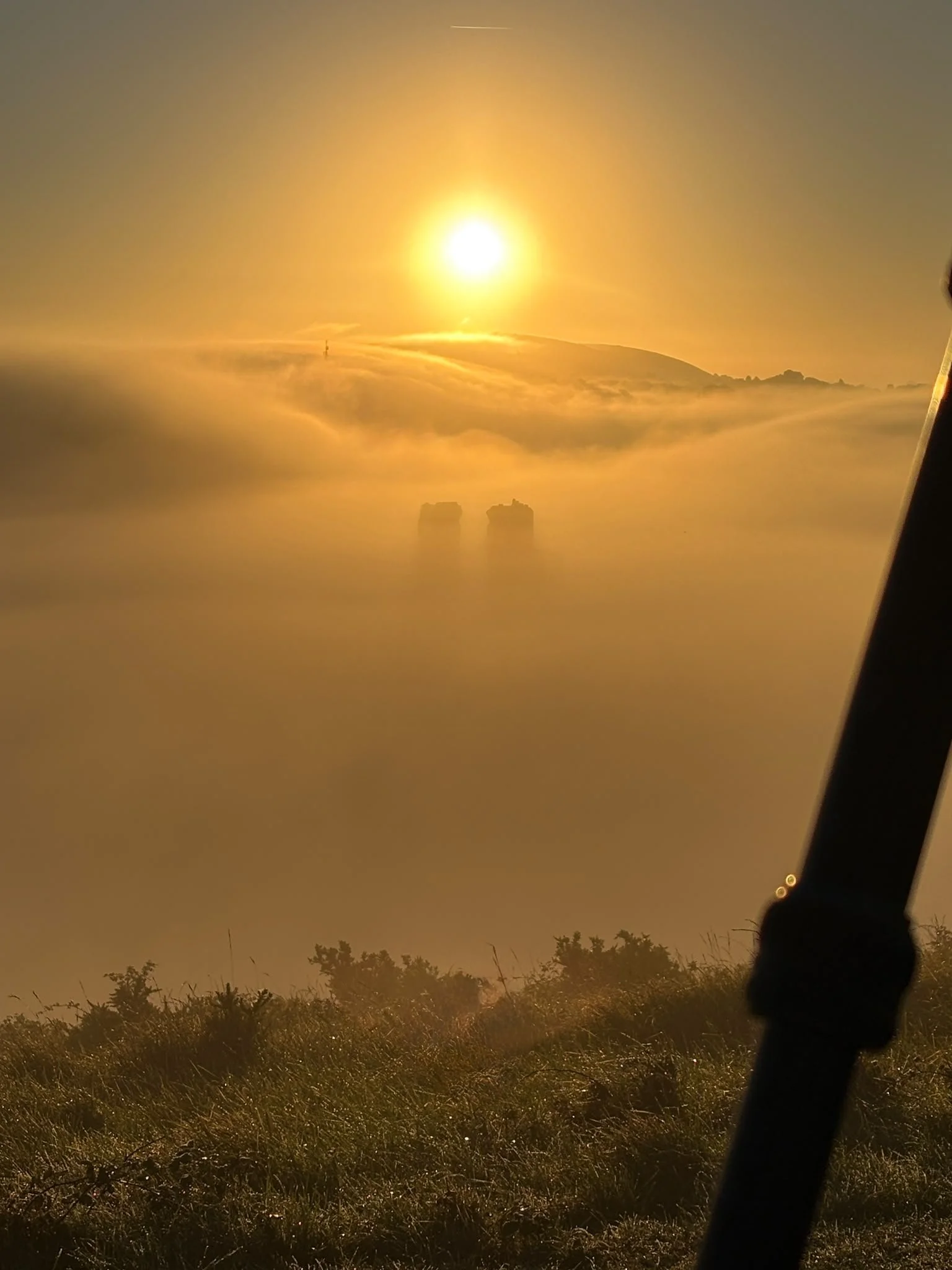
Camera ready as Corfe Castle begins to emerge once again from the mist.
I particularly like having this photograph from the morning. It isn't a carefully composed landscape image taken with my main camera; it's simply a quick phone photograph of the scene in front of me.
But in many ways it tells the story better than a finished photograph can.
The camera is waiting, the valley is still completely covered in mist and just enough of the castle is visible to show exactly what we were watching unfold.
And then the waiting started to pay off again.
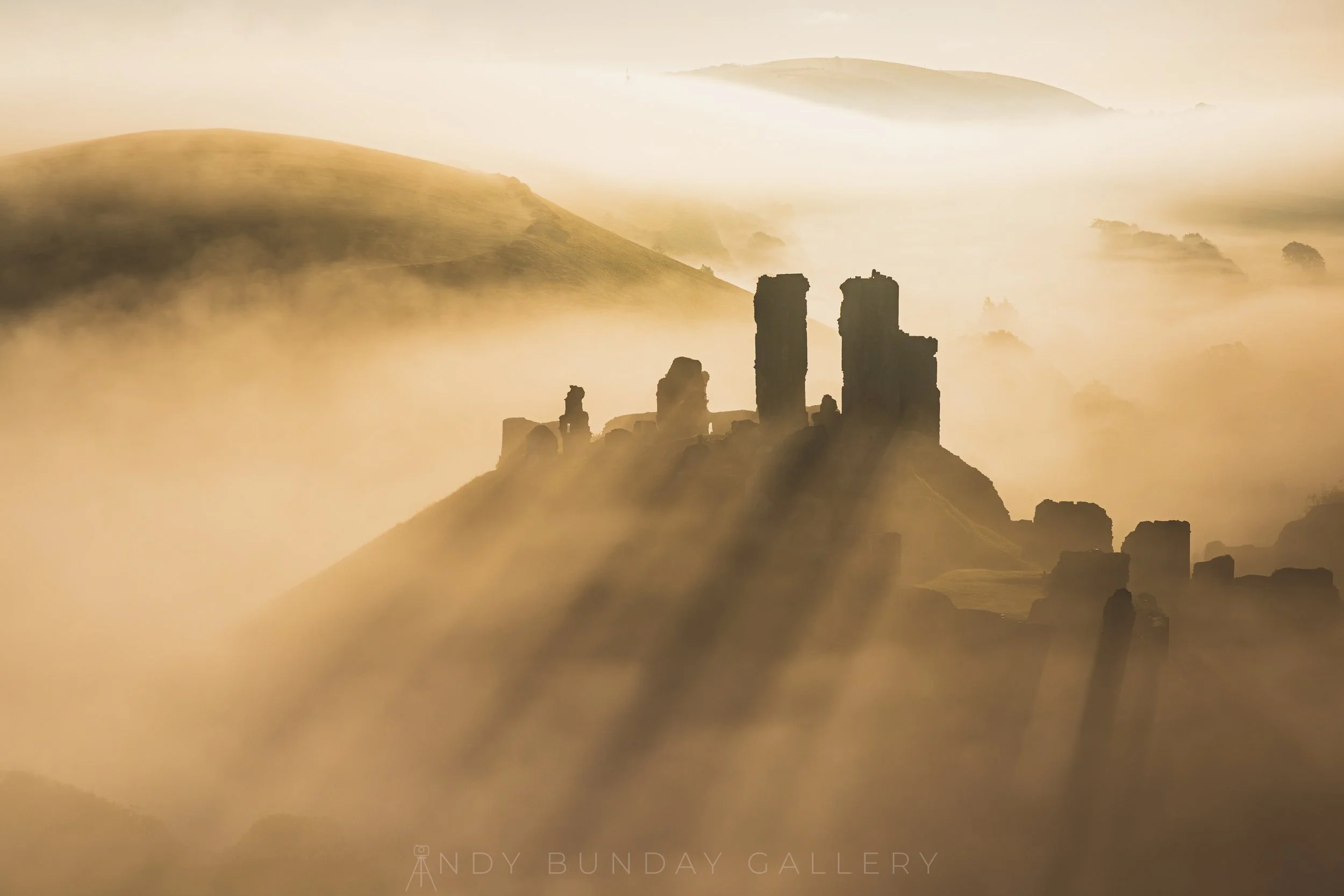
Corfe Castle briefly emerging as the mist begins to settle back into the valley.
MORE THAN JUST GETTING THE PHOTOGRAPH
It would be easy to judge a morning like this purely by the photographs I came home with.
And after more than twenty attempts, I’m certainly pleased finally to have photographed Corfe Castle in the conditions I'd imagined for so long.
But mornings like this are also a reminder of why I keep going back to places I've photographed before.
No two visits are quite the same.
You can stand in exactly the same place, with exactly the same camera and lens, and the landscape can give you something completely different. Sometimes you come home without the photograph you wanted. Occasionally you come home with something you hadn't even considered.
And every now and then, after enough early alarms and unsuccessful journeys, everything finally comes together.
More than twenty visits to Corfe Castle.
This time, the 4:45am alarm was worth it.
FROM MIDDAY TO SUNSET
Brean & Berrow, Somerset — 14 September 2026
There are days when photography is about being in exactly the right place for a few fleeting minutes of perfect light. And then there are days when it is simply about spending time somewhere, exploring what the changing light gives you and adapting as the day unfolds.
Monday 14 September was very much the latter.
We travelled down to the Somerset coast during the morning, arriving around early afternoon and spending the first part of the day exploring Brean and Berrow. It wasn't the time of day I would normally choose for landscape photography — the sun was high and the light was strong — but sometimes conditions that initially seem less than ideal can lead you in a completely different direction.
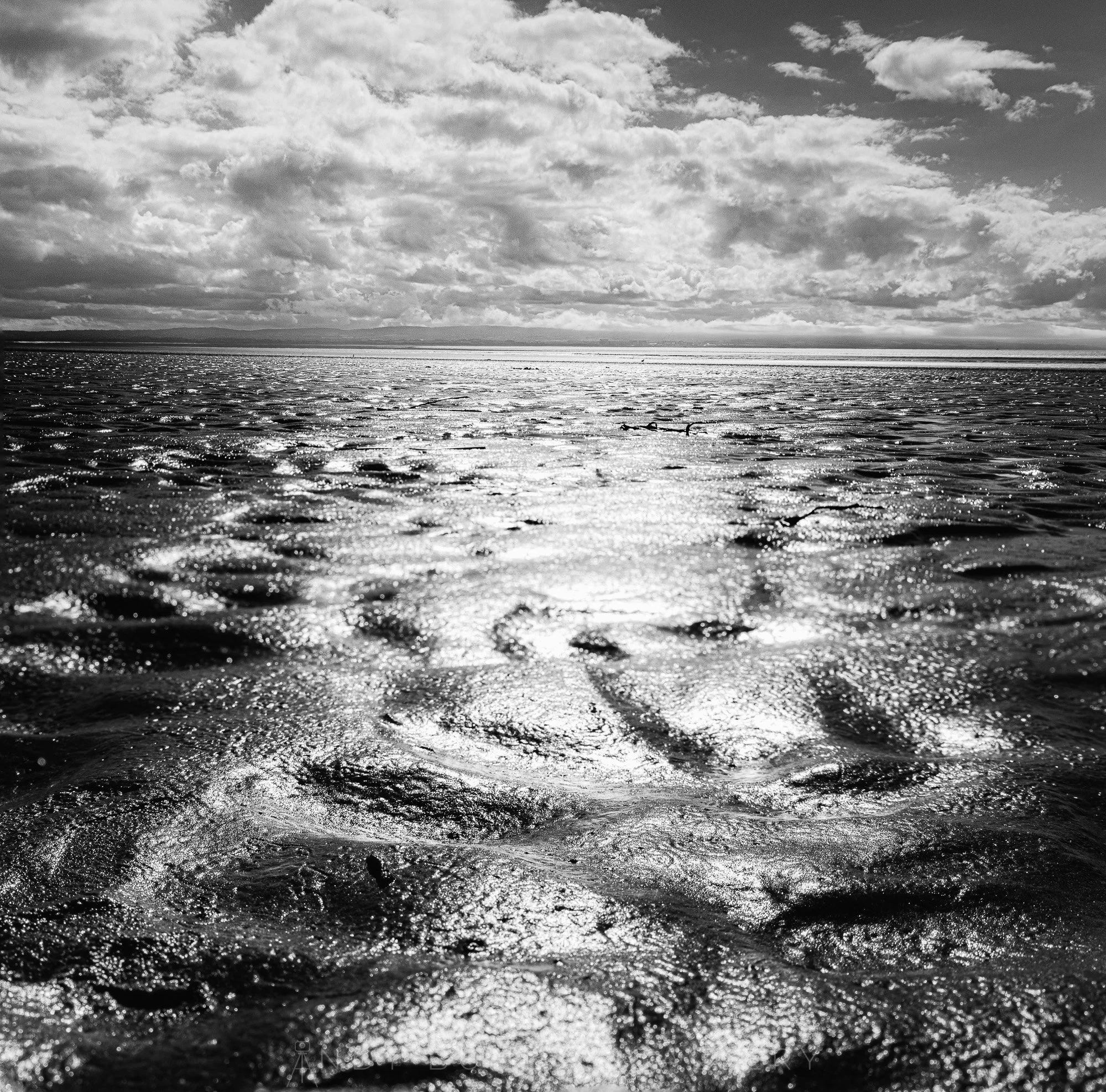
Midday light catching the wet sand at Brean Beach, Somerset.
Rather than fighting the harsh light, I decided to use it.
The wet sand was catching the sunlight beautifully, creating areas of intense brightness surrounded by deep shadow. Once I started looking at the landscape in terms of shape, texture and contrast rather than colour, I could immediately see the potential for black and white.
Getting low to the beach brought out all the texture left behind by the retreating tide. The reflected sunlight almost turned the wet sand metallic, while the clouds gave the scene the drama it needed above the horizon.
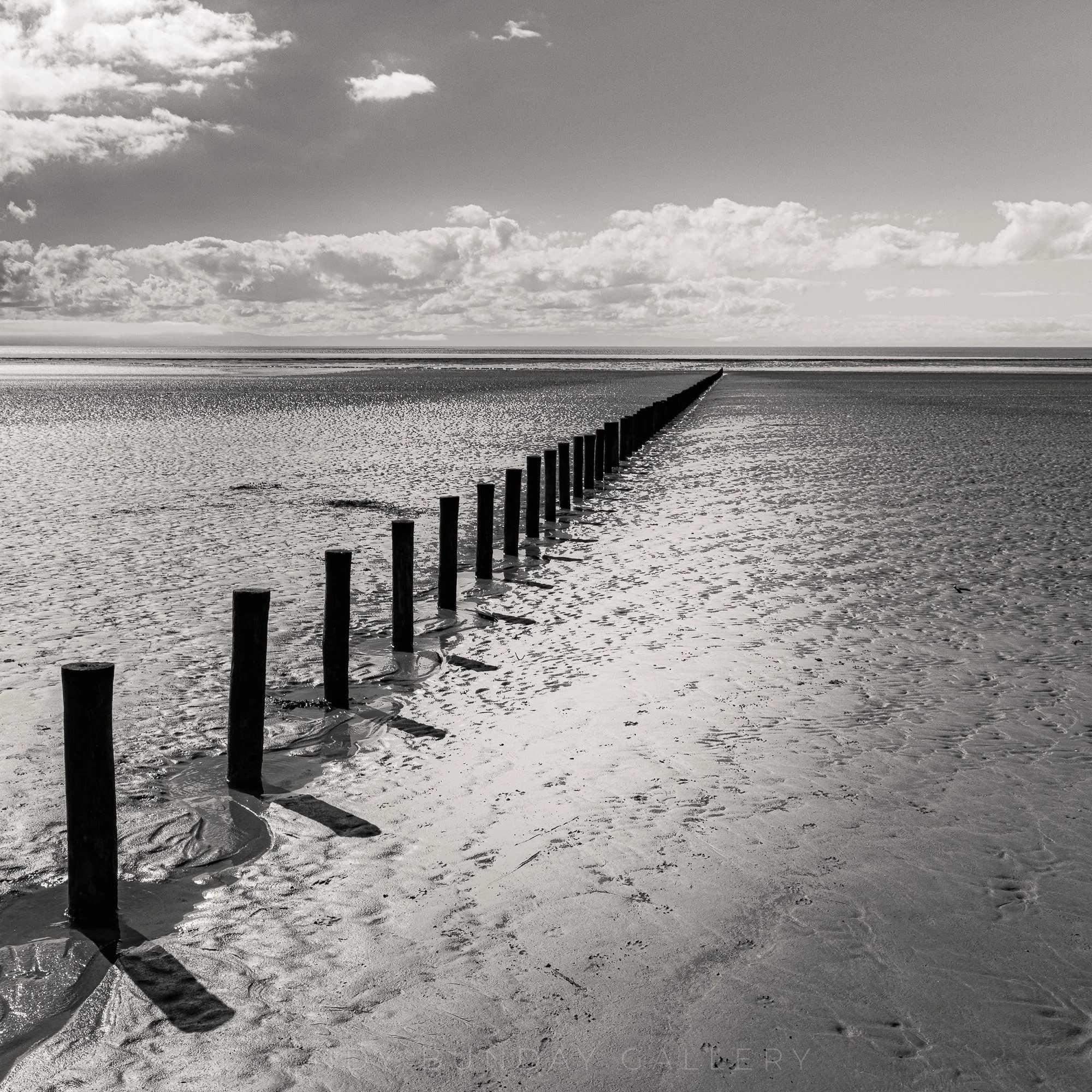
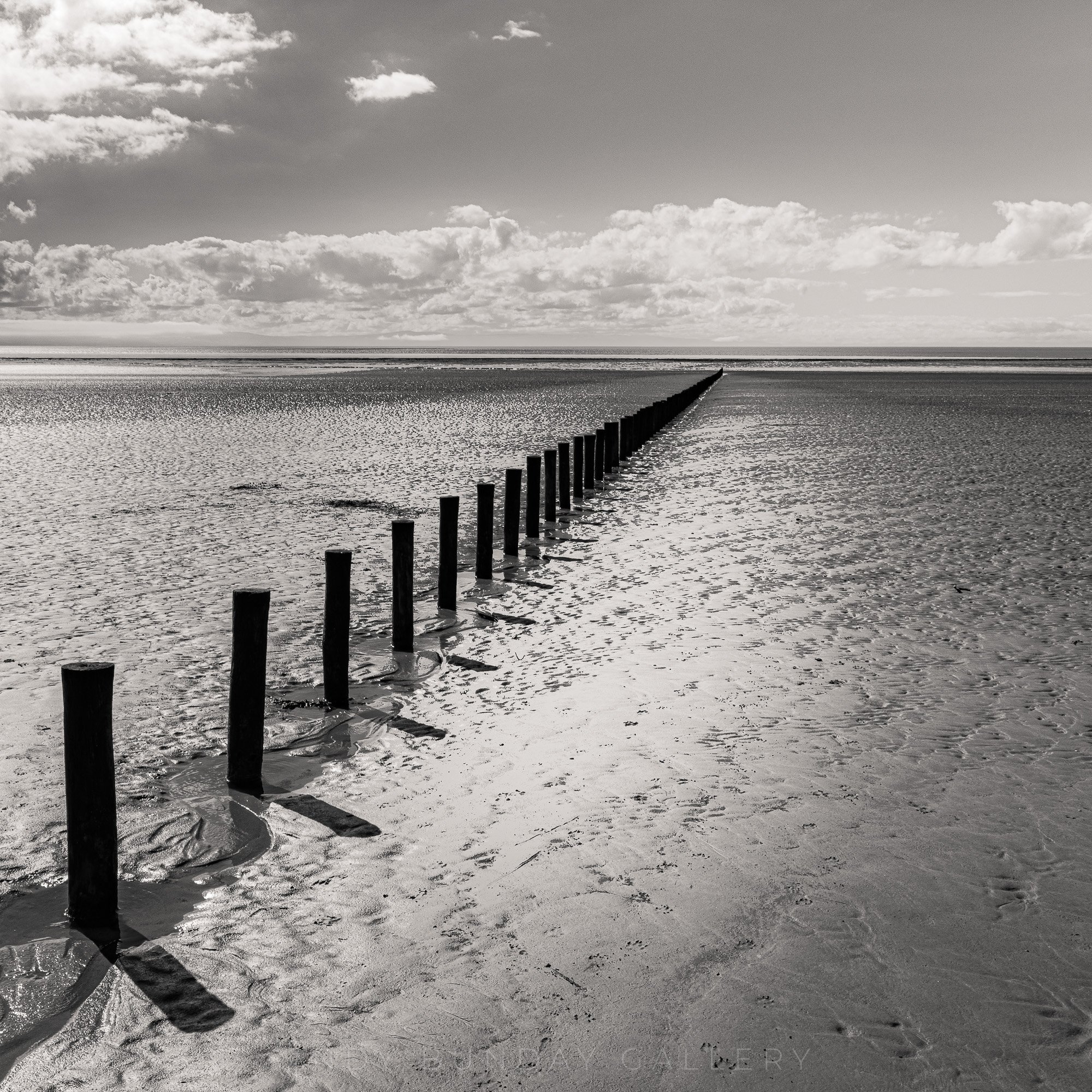
A line of weathered wooden posts stretching towards the horizon at Brean Beach, Somerset.
SPACE, SAND AND THE SOMERSET COAST
One of the things that strikes you about this stretch of coastline at low tide is its sheer scale.
With the tide so far out, the beach seems to stretch forever. Walking across that huge expanse of sand, with the dunes running alongside and the distant coastline on the horizon, gives you a real sense of just how open this part of Somerset feels.
Photography was obviously part of the reason for coming here, but this is also simply a wonderful coastline to explore. You certainly don't need to have a camera with you to appreciate it — whether you're walking the beach, exploring the local area or just enjoying the space and sea air, Brean and Berrow are places where it's very easy to spend a few hours.
A BREAK BEFORE THE EVENING LIGHT
After spending the afternoon exploring and photographing the beach, we headed to the bed and breakfast I'd booked for the night. It turned out to be a fantastic place to stay and gave us the perfect opportunity to take a break, recharge and get ready to head back out later in the day.
One of the things I enjoyed about this trip was that it didn't feel as though the whole day had to revolve around photography. Brean and Berrow are simply lovely places to spend some time, with huge open beaches and plenty to explore in the surrounding area.
After a chance to relax, we headed back out towards Berrow for the evening. By then the character of the coast was beginning to change completely.
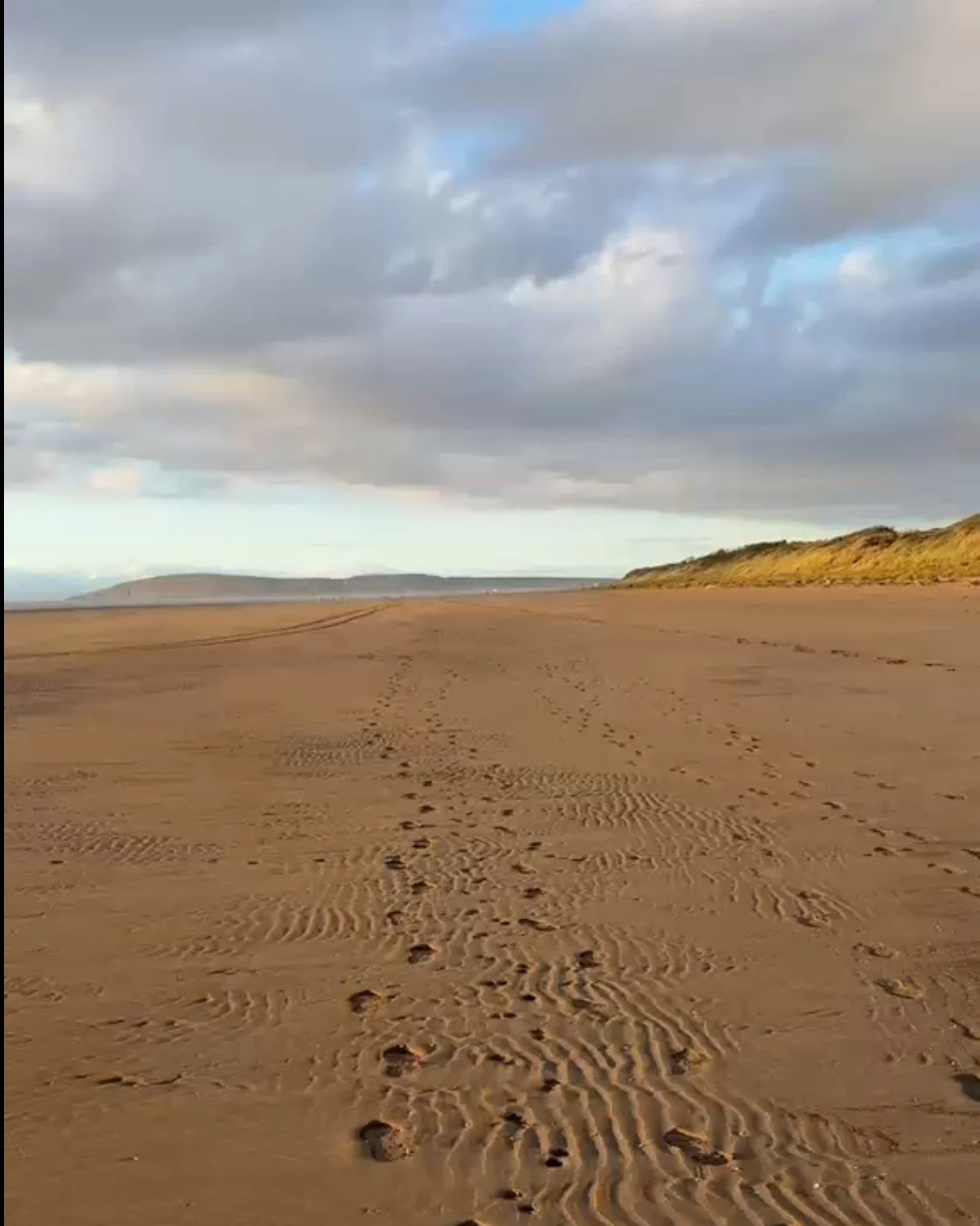
Heading back along the vast expanse of Berrow Beach for the evening session.
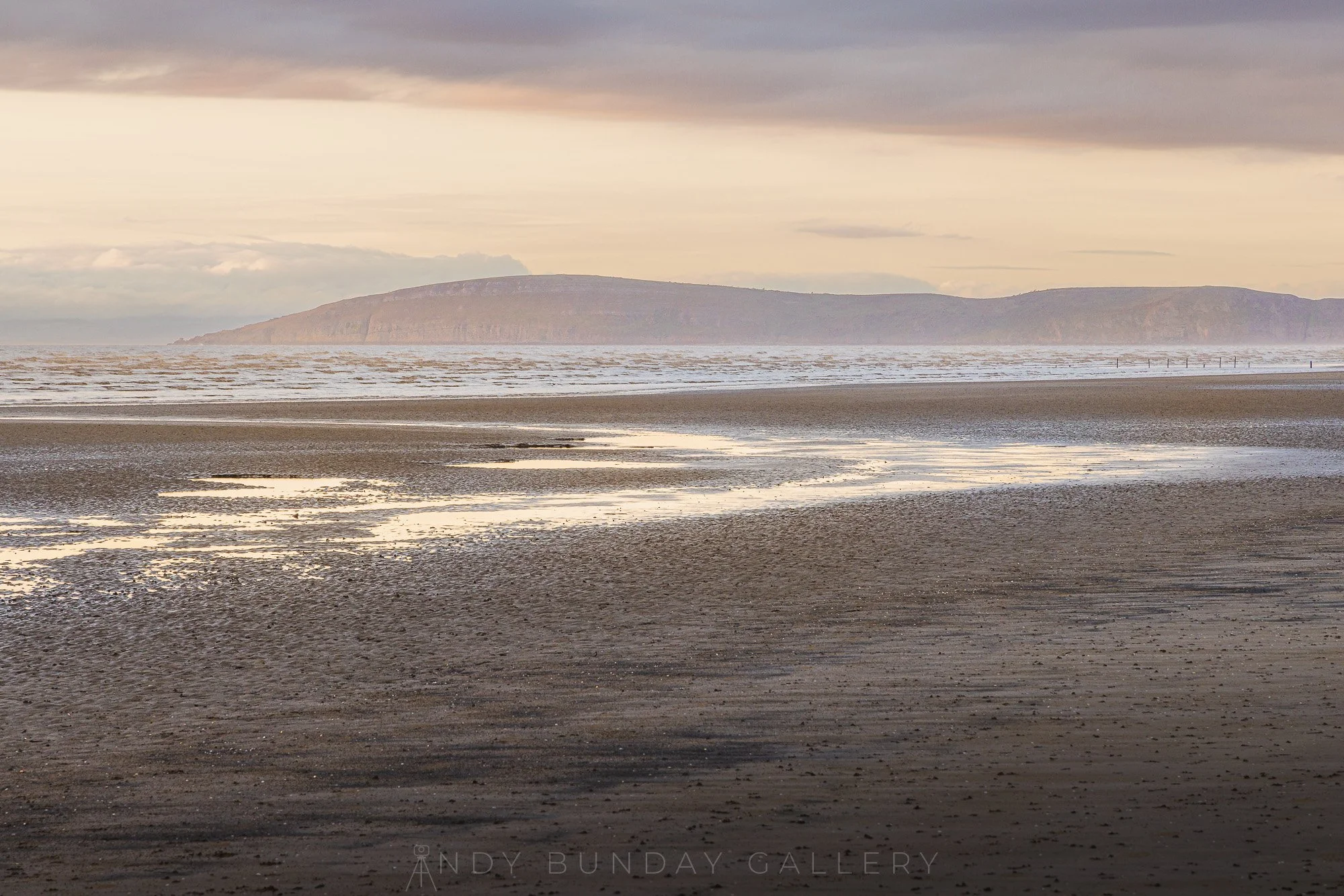
Heading back along the vast expanse of Berrow Beach as the evening light begins to change.
WHEN THE PLAN CHANGES
I'd arrived at the wreck with an idea of the photograph I wanted to make. With the remains of the Nornen against the evening light, I hoped the conditions would come together for a much tighter composition of the wreck.
For a while, I waited and watched the light, hoping that the scene I'd pictured would develop. But landscape photography doesn't always work like that. However carefully you plan, ultimately the weather and the light have the final say.
The photograph I had in mind simply wasn't coming together.
Rather than continue chasing an image that wasn't there, I changed my approach. I stepped back, looked at the wider scene and began to notice how much more interesting the whole landscape had become. The wreck was no longer the photograph in itself — it became part of something much bigger.
The colour stretching across the horizon, the huge expanse of beach and the remains of the Nornen suddenly worked together far better than the photograph I'd originally planned.
Sometimes the best thing you can do is stop trying to make the photograph you came for and start looking at the photograph that's actually in front of you.
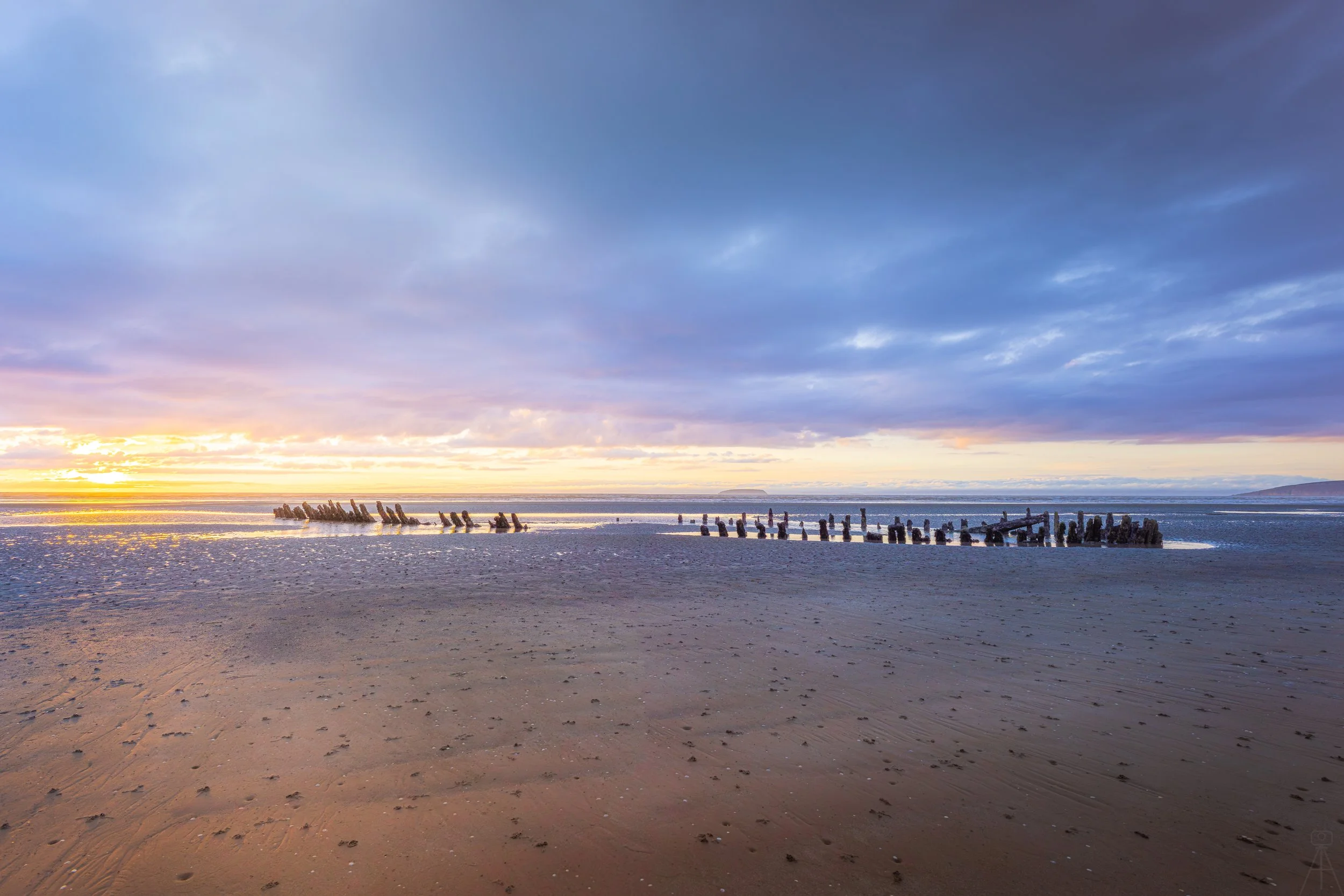
The wreck of the Nornen beneath the last light of the day at Berrow Beach.
Looking back, the day turned out to be less about chasing a particular photograph and more about responding to what was in front of me. From the harsh midday light at Brean to the changing colours over Berrow in the evening, the conditions continually pushed me to look at the landscape differently.
And perhaps that's what I enjoyed most about the day. Whether you're visiting with a camera or simply coming to walk the beach and take in the Somerset coast, Brean and Berrow are wonderful places to spend some time. I'll certainly be returning — although next time, I'll once again let the light decide what I come home with.